A full UX design project completed as part of the Professional Diploma in UX Design at the UX Design Institute (2020–21). Starting from two provided usability test recordings, I conducted research, synthesised pain points, designed wireframes, and built a prototype — following the complete UX design process end to end.
Step 01
Research & Benchmarking
Step 02
Usability Testing & Notes
Step 03
Analysis & Synthesis
Step 04
Sketches & Flow Diagram
Step 05
Wireframes & Prototype
The research phase began with a benchmarking exercise — analysing existing flight booking apps and websites to understand common UX patterns, identify industry standards, and spot opportunities for improvement.
Key touchpoints across the booking flow were documented, from search and seat selection through to payment and confirmation.
Method
Benchmarking
Pages
15
← Scroll through all 15 pages →
Benchmarking report — 15 pages of competitor UX analysis
To get a deep understanding of how a user behaves when booking a flight, I conducted two comparative tests using Zoom and Reflector3.
Scenario 1 — EasyJet
Scenario 2 — Note-taking
Two usability tests provided by the programme — pain points noted from both sessions.
Live usability test — think-aloud session on EasyJet booking flow
← Scroll through all 9 pages →
Note-taking sheets — pain points from all usability test sessions
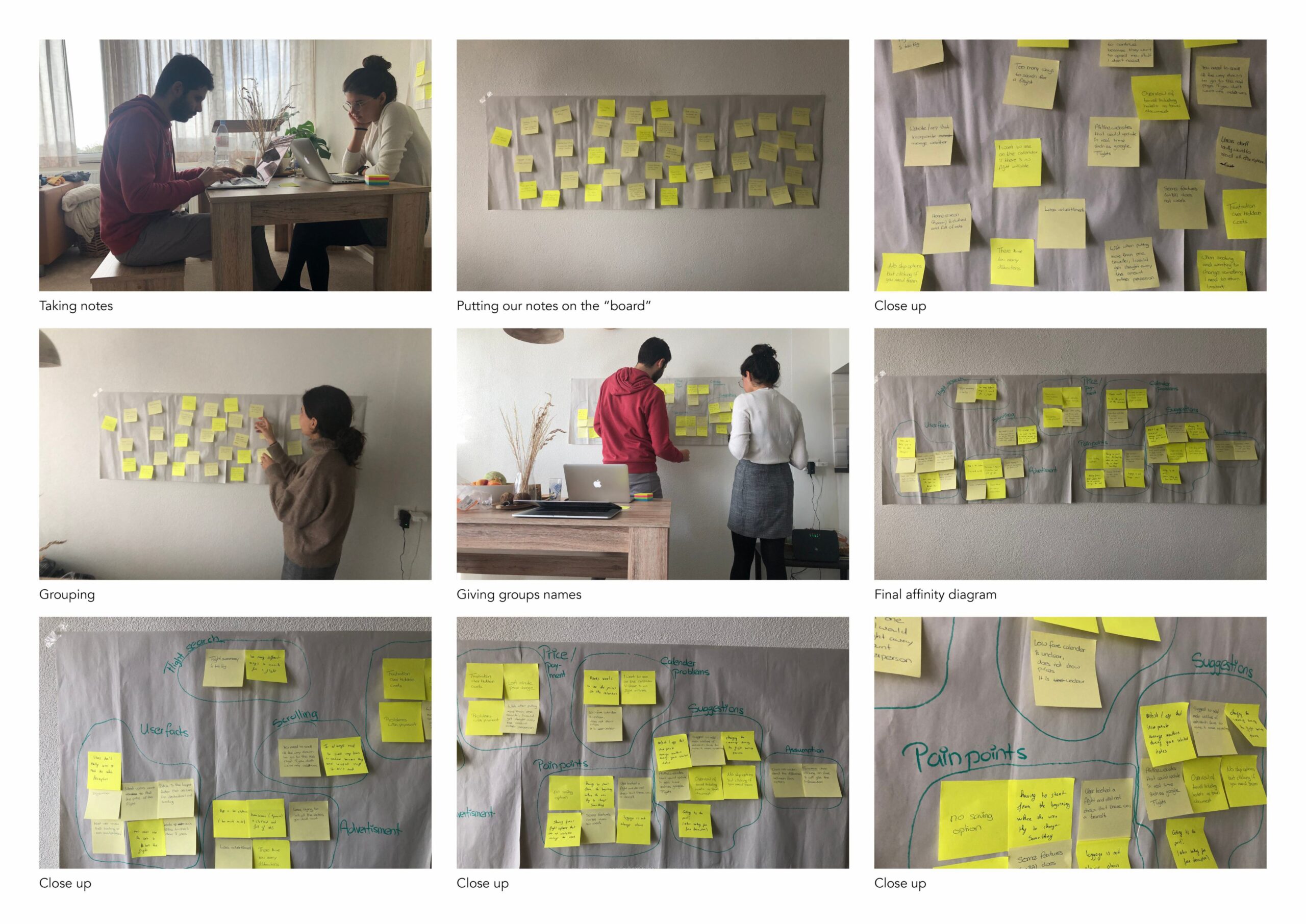
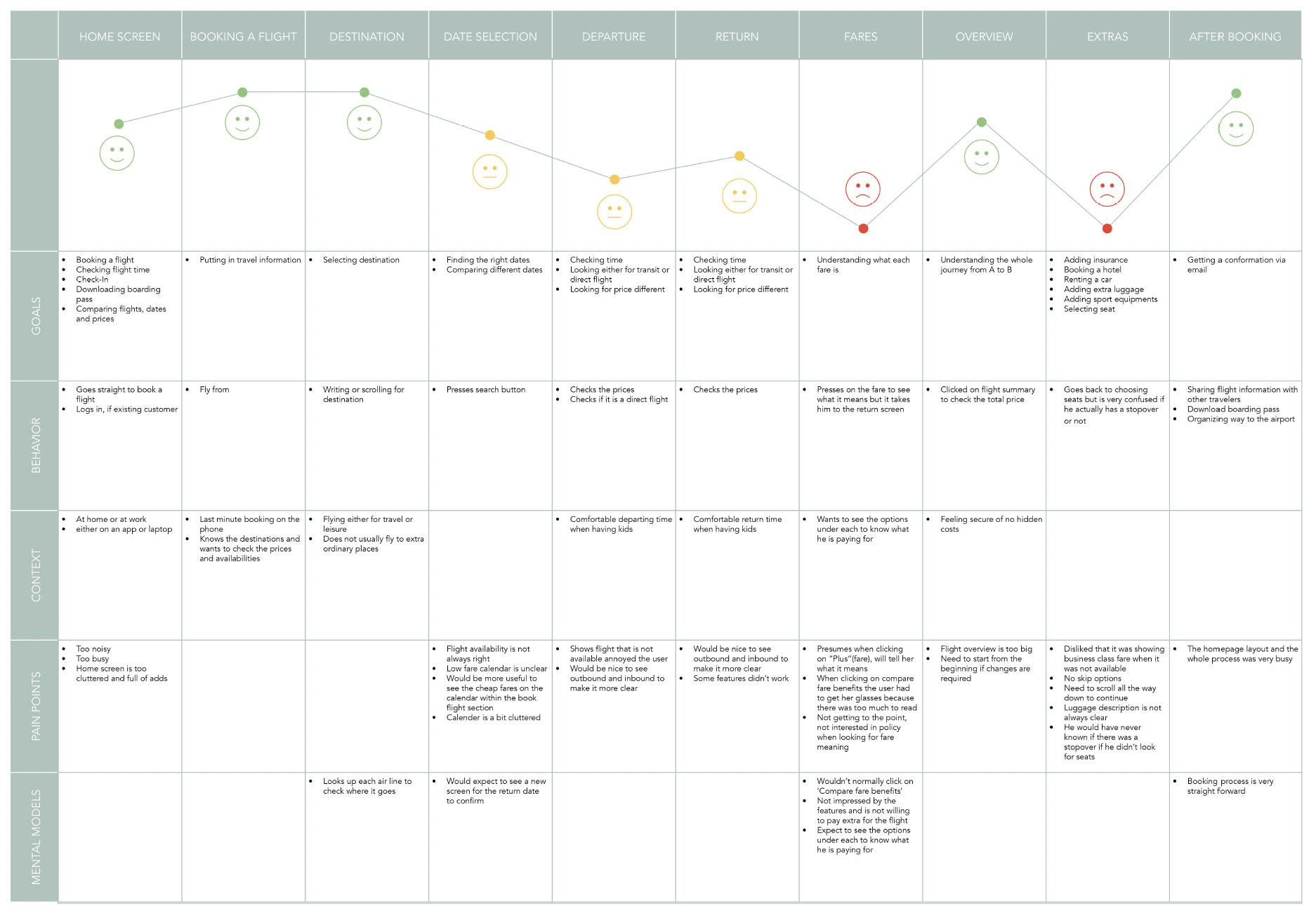
The notes from all three sessions were synthesised into two deliverables — an affinity diagram grouping observations by theme, and a customer journey map tracking the emotional experience across the booking flow.
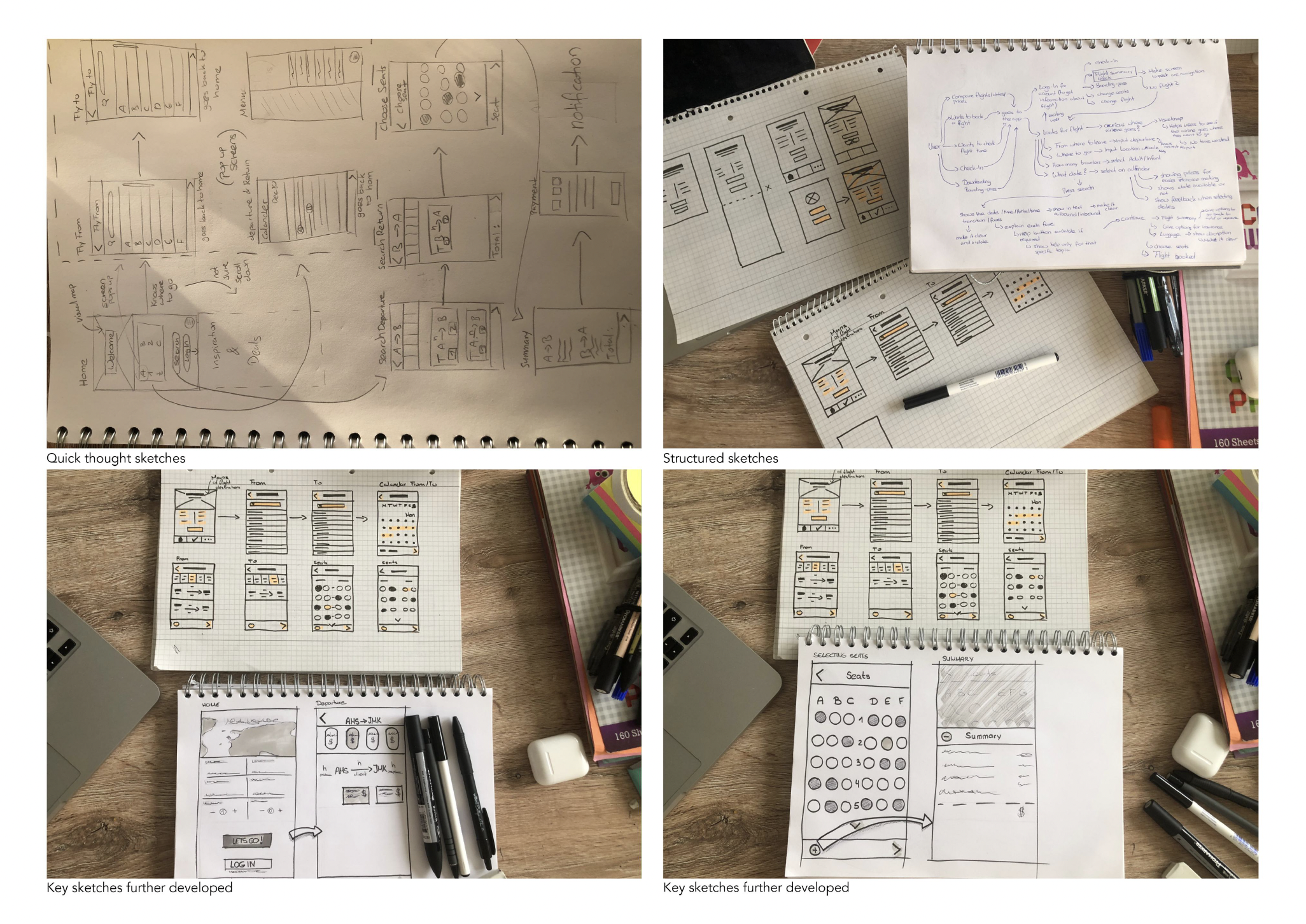
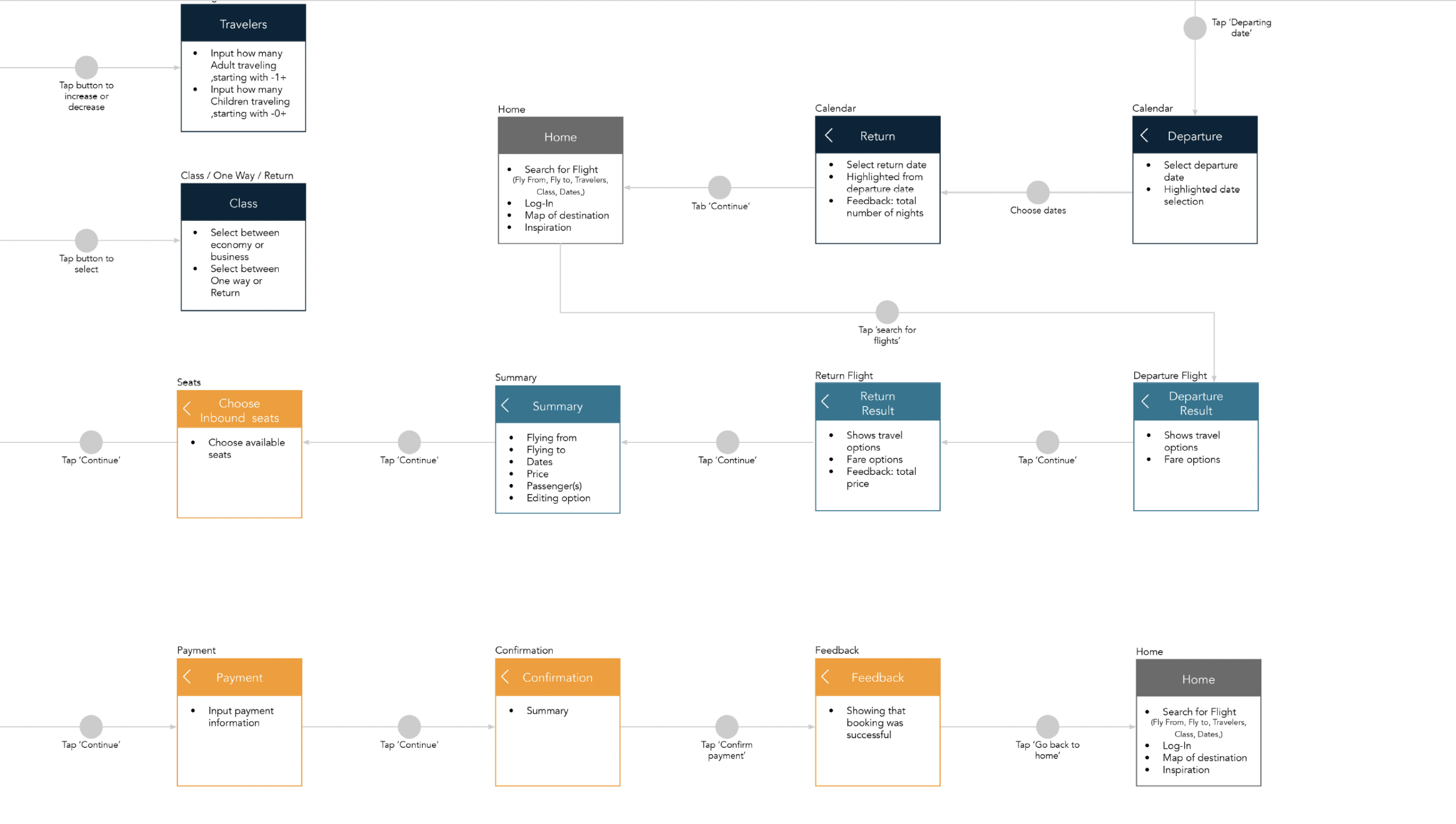
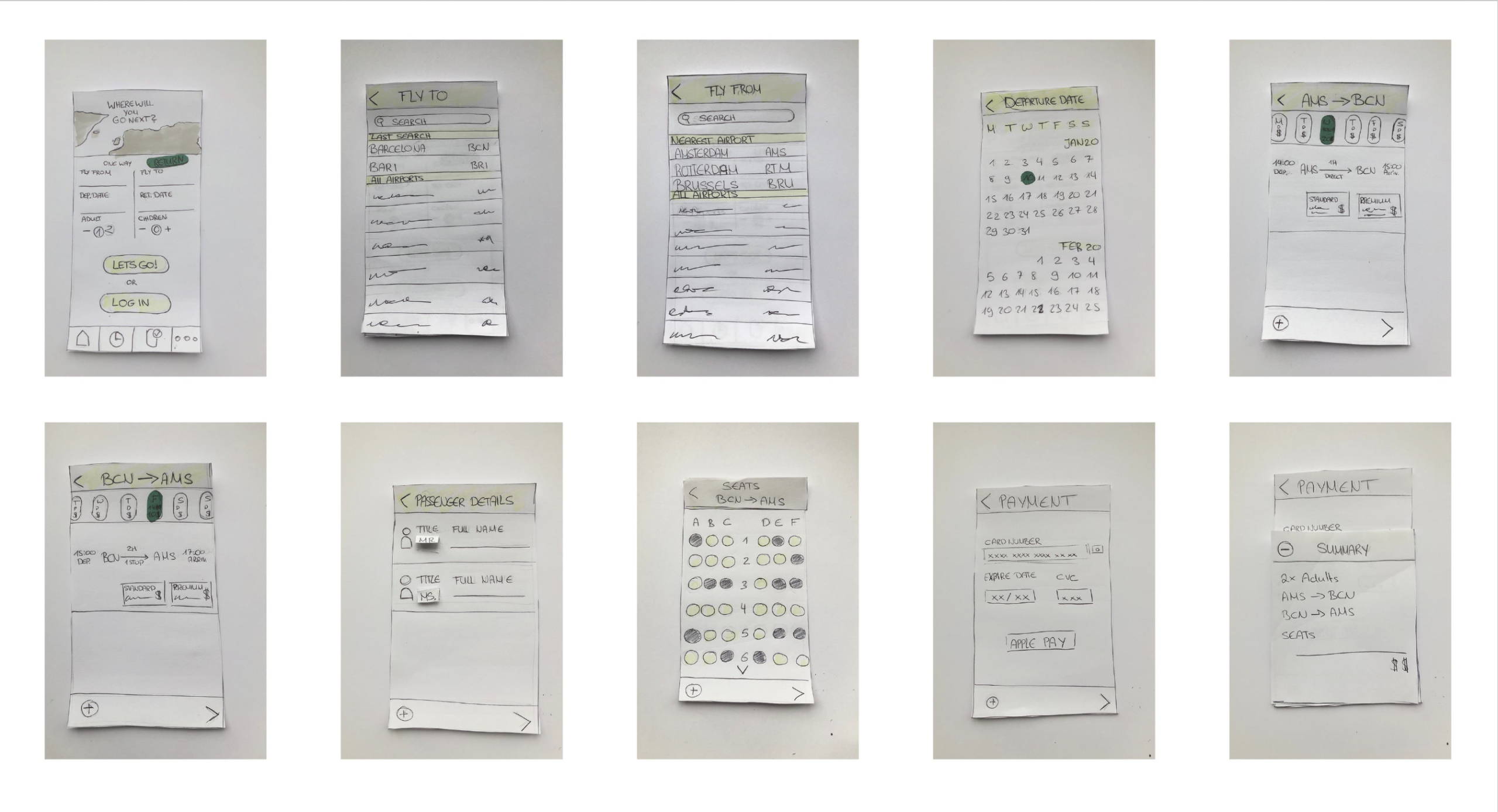
With the insights from research and analysis in hand, the design phase began with sketching — rapid ideation to explore different layout approaches before committing to a direction. A flow diagram then mapped out the complete user flow through the new design.
Sketch sheets
2
Flow diagram
1

Sketch sheets — layout exploration for key screens
High-fidelity wireframes were produced in Figma — 6 screen layouts covering the full booking flow from search through to confirmation. The wireframes addressed all the pain points identified in the usability testing phase.
A clickable prototype was also built in Figma to allow interactive testing of the redesigned flow. The prototype walkthrough video is shown below.
The original Figma prototype file is no longer available, but the wireframe screens and walkthrough video are shown here.
Prototype walkthrough — interactive Figma flow recorded
Full 6-page wireframe document
After completing the full UX process — research, usability testing, affinity mapping, customer journey mapping, sketching, flow diagramming, wireframing, and prototyping — I was awarded the Professional Diploma in UX Design by the UX Design Institute, accredited by Glasgow Caledonian University at SCQF Level 8.
Awarded
August 2021
Credits
20 SCQF · Level 8
Professional Diploma in UX Design — UX Design Institute / Glasgow Caledonian University